
CAREERS
The ₹2.4 Crore Freelance Retirement Plan Is a Tight Fit
A Chennai freelancer’s age-55 Munnar plan hits ₹2.4 crore only if she saves 20% of ₹5 lakh a year while parents take 40% of a thin budget.

One planner’s model funds a 27-year-old Chennai freelancer’s age-55 Munnar retirement with ₹2.4 crore, on a 20% savings rate from ₹5 lakh a year. She already owns a house, holds health cover, runs a ₹5,000 monthly SIP, and has a PPF. The same model needs ₹2.33 crore at 55, a gap of ₹7 lakh.
Public talk still chases pots of ₹20 crore to ₹50 crore. For this single-income case, the tighter problem is a funding ratio that sits just above 1 once parents take 40% of a thin budget and dry months interrupt the SIP habit.
The ₹2.4 Crore Plan Barely Clears Its Own Bar
Apurv Gupta, co-founder and CEO of Wealth Beacon, built the working sheet off the worst year, not the best. “For planning, we have made conservative estimates (as in take the lower end of the income),” he said. That floor is ₹5 lakh. He assumes she spends 80% and invests 20%, lives to 85, and wants to stop paid work at 55, then shift to Munnar using the Chennai house as the buy-in.
Chandni Anandan, a chartered accountant at ClearTax, put the same profile in a lower return band and a shorter compounding window. She treated ₹1.5 crore to ₹3 crore as a realistic band for a normal freelance income, and still placed this client toward the top of that band because she is a single earner with parents to support. Her sheet used 10% growth in savings, an 8% investment return, and 25 years. The projected pot is ₹1.71 crore in nominal terms, and she warned that inflation eats the real value further.
The working window from 27 to 55 is 28 years. Anandan’s 25-year model is shorter than that span, which is one reason her ₹1.71 crore sits below Gupta’s ₹2.33 crore need.
TWO PLANNERS, TWO POTS
| Planner | Savings path | Return used | Time frame | Projected pot | Need at 55 |
|---|---|---|---|---|---|
| Chandni Anandan, ClearTax | Savings grow 10% a year | 8% | 25 years | ₹1.71 crore | Higher end of ₹1.5 crore to ₹3 crore |
| Apurv Gupta, Wealth Beacon | ₹1 lakh a year (20% of ₹5 lakh), stepped up 5% with income | 10% | Work to 55, spend to 85 | ₹2.4 crore | ₹2.33 crore (year-55 spend ₹9.81 lakh) |
Gupta called the funding ratio higher than 1. On his own figures it is ₹2.4 crore against ₹2.33 crore. That is a pass, not a buffer. Miss a year of the ₹1 lakh saving, or see inflation run hotter than 7%, and the ratio slips under 1 without a second income appearing.
WHERE THE CORPUS NUMBERS SPLIT
- Anandan’s sheet: An 8% return over 25 years produces ₹1.71 crore, which she still groups inside a ₹1.5 crore to ₹3 crore band rather than the ₹20 crore to ₹50 crore figures pushed in public talk.
- Gupta’s sheet: A 10% expected return on ₹1 lakh a year, stepped up with 5% income growth, produces ₹2.4 crore against a ₹2.33 crore need at 7% inflation.
- The viral targets: CA Nitin Kaushik has called a ₹100 crore retirement goal a math scam and described ₹2 crore to ₹3 crore, even ₹5 crore, as strong, realistic numbers for ordinary savers, which is the same neighbourhood as this freelance case, not a different sport.
Both planners are arguing against giant influencer pots. They are not arguing that ₹2.4 crore is loose change.
Parents Take 40% of a Thin Expense Base
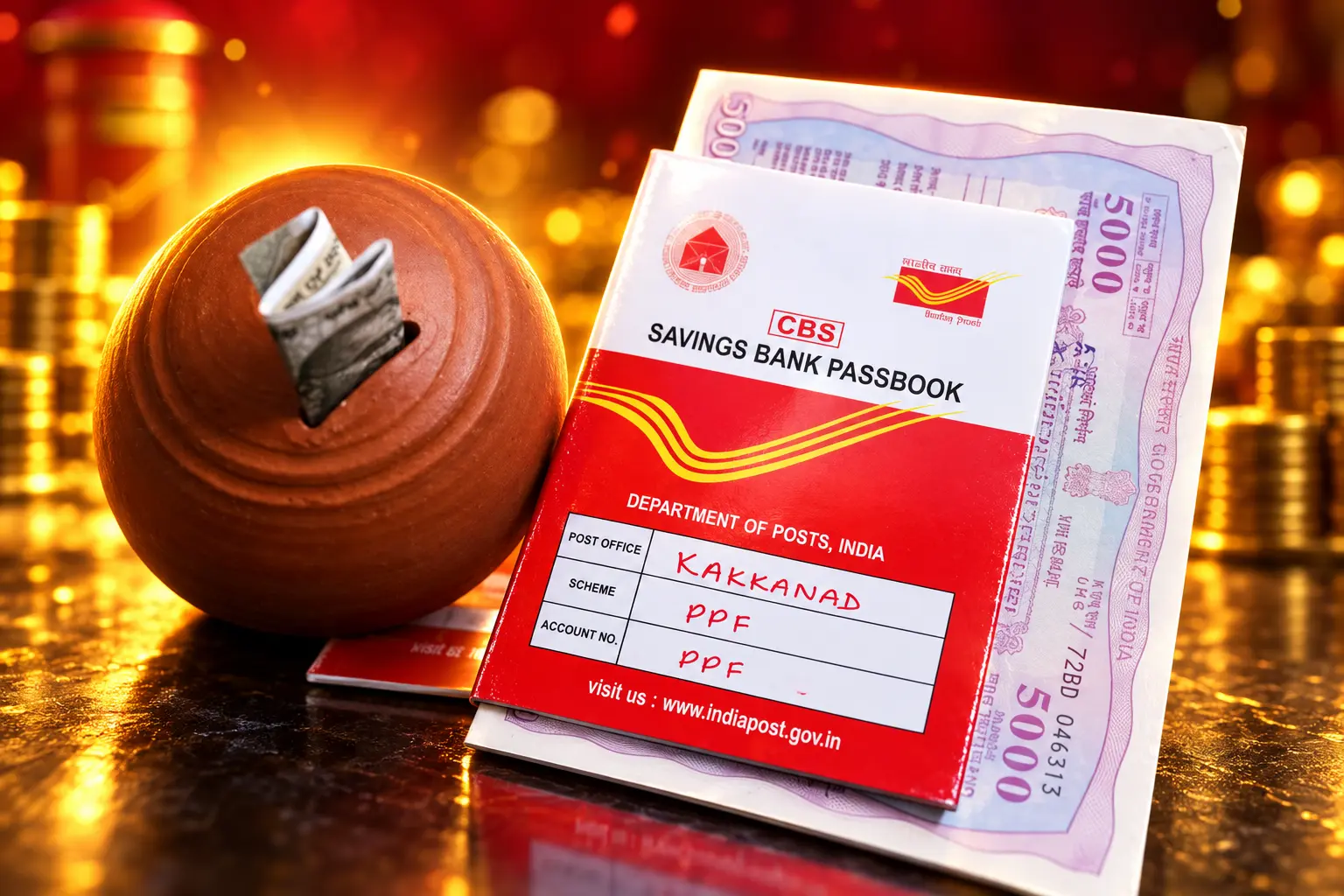
Gupta’s expense line is ₹4 lakh a year, which is 80% of the ₹5 lakh floor. He assigns 40% of that to parents and the rest to her. That is ₹1.6 lakh a year for them and ₹2.4 lakh for her, before inflation. It is also the line that most salaried SIP calculators quietly skip.
THE PARENT LOAD IN THE SHEET
- Parent share: ₹1.6 lakh a year, 40% of the ₹4 lakh spend, from a ₹5 lakh income floor.
- Her share: ₹2.4 lakh a year for everything else, with a house already owned in Chennai.
- Retirement length: Age 55 to 85 is 30 years of drawdown after a 28-year build.
- Household health bills: National Health Accounts 2022-23, released in May 2026, still put out-of-pocket spending at 43.4% of total health expenditure, so a medical shock can hit the same 20% surplus the retirement SIP needs.
Gupta listed an emergency fund, a health corpus for her and her parents, lifestyle upgrades, property upkeep, and a step-up in old age as good-to-haves. Those get funded only in years above the ₹5 lakh floor, in a higher-risk sleeve. In a bad year they compete with the parents’ 40% and with the ₹1 lakh retirement saving. The plan does not pretend they all get paid at once.
Anandan made the same point in plainer tax language. Parental duties cut investible surplus, so a single-income freelancer lands at the high end of her ₹1.5 crore to ₹3 crore band even when the viral ₹20 crore to ₹50 crore talk is ignored.
Why a ₹5,000 SIP Fights the Cashflow Rule
The client already puts ₹5,000 a month into a SIP, which is ₹60,000 a year, matching Gupta’s equity sleeve exactly. He then adds ₹40,000 a year to PPF, for ₹1 lakh in total, or ₹8,333 a month, stepped up as income rises. There is no other goal on his sheet. The Chennai house is meant to fund the Munnar house, so retirement is the only pot that has to be filled from cashflow.
Unlike structured monthly SIPs, investment contributions in this case are likely to be irregular and dependent on project inflows.
Chandni Anandan, chartered accountant, ClearTax
She said priority therefore shifts from a fixed contribution plan to a cashflow-first strategy, with liquidity and emergency buffers ahead of the long pot. That advice sits in tension with the ₹5,000 SIP already running, because a SIP is a salaried habit. It drafts the account on a calendar, not on invoice collections.
THE CASHFLOW-FIRST RULES
- Fat months: Surplus after bills goes first to security buffers, then to the long-term pot, rather than to a lifestyle step-up.
- Thin months: Keep cash and keep cover. Do not raid the core to keep a SIP number pretty.
- The ₹5 lakh floor: Treat ₹1 lakh a year as the retirement minimum, with Gupta’s 5% step-up only when income actually rises.
- Years above ₹5 lakh: Extra receipts fund emergency cash, parent and self health cover, house upkeep, and only then a higher-risk sleeve.
If the SIP is paused in a dry quarter, Gupta’s 10% path is no longer the path in the table. The honest version of this plan is lumpy deposits that average ₹1 lakh a year, not a ₹8,333 auto-debit that never bounces.
PPF at 7.1% Cannot Carry Medical Bills
Gupta’s mix is ₹60,000 in equity SIPs and ₹40,000 in PPF, with a 10% expected return on the combined pot. The Finance Ministry left small-savings rates unchanged for October to December 2026, so PPF still pays 7.1%, with a ₹1.5 lakh yearly cap and a ₹500 floor. Interest is compounded yearly on a 15-year account. At 7.1%, the PPF sleeve cannot manufacture the 10% blended figure on its own. The equity side has to do the lifting.
That 10% also has to beat Gupta’s 7% inflation assumption. Headline prices are softer than that assumption right now, but household bills are not. The official consumer price index for September showed 5.54% (provisional), with food and beverages at 7.74%. The Reserve Bank consumer price series had combined inflation near 4.4% in mid-2026. The RBI’s September 2026 household survey, covering 5,987 urban households in 19 cities, found people felt inflation at 8.4%, against official urban CPI of 4.88%, and the median guess for a year ahead was 10%.
RATES SET AGAINST THE 7% INFLATION ASSUMPTION
| Measure | Rate | What it does to the plan |
|---|---|---|
| PPF, Oct-Dec 2026 | 7.1% | Gupta’s ₹40,000 conservative sleeve; real return is thin if prices run at 7% |
| Gupta’s inflation input | 7% | Pushes year-55 spend to ₹9.81 lakh and the need to ₹2.33 crore |
| CPI, September 2026 | 5.54% | Headline prices sit below his 7% input |
| Urban households, RBI survey, September 2026 | 8.4% felt | The rate people say they are paying, above his 7% |
| Aon, 2026 employee medical-plan costs in India | Up 11.5% | Health inflation runs faster than the 7% used for ordinary spend |
| Nifty 50 TRI to 30 September 2026 | 10-year 11.5%; past year down 7.1% | A 10% blended return needs equity to hold up; one-year losses happen |
Aon, the benefits consultant, put India’s 2026 employee medical-plan cost rise at 11.5%, above a 9.8% global average. Gupta parked a separate health corpus in the “good year” bucket. If medical bills rise near 11.5% while the retirement sheet inflates ordinary spend at 7%, the parent line is the first place the surplus dies.
NPS Now Lets Platform Workers Start at ₹99
Independent professionals can already open NPS on the All Citizen Model. Self-employed savers on the old tax regime can deduct up to 20% of gross total income under 80CCD(1), inside the ₹1.5 lakh combined cap, plus an extra ₹50,000 under 80CCD(1B). Those deductions vanish on the new regime. Gupta’s sheet did not use NPS as the core engine; it used equity SIPs and PPF. NPS is the state tool built for lumpy pay, which is the cashflow problem Anandan described.
The Pension Fund Regulatory and Development Authority went further for gig work. Its 29 October 2025 circular set out the NPS e-shramik model for platform workers, using aggregators such as Zomato, Swiggy, Blinkit, Ola, Uber and Urban Company. Contributions can be joint, worker-only, or aggregator-only. There is no prescribed minimum or maximum. The circular’s example is ₹99 per credit. Exit follows All Citizen Model rules. A worker can serve several platforms but holds one pension account, opened through a single aggregator, and can port it.
On 18 August 2026 the Authority extended the Points of Presence onboarding incentive through March 2027, still up to ₹100 per new account, for enrolments till 31 March 2027. PoPs cannot levy an onboarding fee while that incentive runs.
THE GIG PENSION CALENDAR
- 1 October 2025: PFRDA says the NPS e-shramik Platform Service Partner Model launched.
- 29 October 2025: Circular PFRDA/2025/19/PDES/02 sets the ₹99-style contribution model and All Citizen exit rules.
- 18 August 2026: Circular PFRDA/2026/43/P&DCORP/02 extends the ₹100 PoP incentive to enrolments up to 31 March 2027.
- 7 October 2026: PFRDA says leading platforms have put ₹1.5 crore+ into the NPS corpus in the first year, with lakhs of gig and platform workers getting a chance to save.
A year ago, a new chapter began for India’s gig and platform workers.
On 1st October 2025, PFRDA launched the NPS e-Shramik Platform Service Partner Model, bringing millions of workers into the fold of long-term financial security and taking a meaningful step towards Pension4All… pic.twitter.com/ohlfBkZOan
— PFRDA (@PFRDAOfficial) October 7, 2026
A first-year pool a little over ₹1.5 crore, spread across lakhs of workers, is the practical picture of flexible deposits. It is the right product shape for irregular pay, and it is nowhere near a personal ₹2.4 crore pot. The constraint is still whether this freelancer can keep 20% aside when parents and hospital bills move first. Tiny, optional credits do not close that gap on their own.
Tax Books Matter More Than the Corpus Headline
Anandan treated freelance receipts as business income. On a ₹5 lakh year she said the lower end sits below the basic threshold, so a return may not be required. The moment receipts rise into the ₹10 lakh half of the client’s range, the file changes. Notified professions can use Section 44ADA, which deems 50% of gross receipts as income, with a ₹50 lakh cap, or ₹75 lakh if cash receipts stay at 5% or less. Writers and some other independent trades more often fall under 44AD, not 44ADA. Either way, the 50% shortcut is not a free pass to skip records.
Proper maintenance of books of accounts, supported by documentation of income and expenses, is essential under applicable income tax provisions.
Chandni Anandan, chartered accountant, ClearTax
Where income crosses the threshold, she said business costs should be claimed on a proportionate basis, in line with actual use for earning work. Statutory audit, when it applies, still has to be done. For audit cases, the tax audit report deadline is 21 October 2026 and the return deadline is 21 November 2026. Under the new regime, a rebate can take tax to zero on taxable income up to ₹12 lakh, and eligible professionals on 44ADA can see that bite on receipts around ₹24 lakh. Freelancers do not get the salaried standard deduction.
WHAT THE TAX FILE HAS TO HOLD
- Proof of receipts: Invoices, bank credits and TDS certificates, so a ₹5 lakh year and a ₹10 lakh year can both be shown.
- Proof of costs: Only the work share of mixed expenses, not the full household bill.
- Presumptive choice: 44ADA at 50% for notified professions within the receipt cap, or regular books if you need actual costs.
- Old-regime extras: PPF inside 80C, NPS 20% of gross total income inside the ₹1.5 lakh cap, plus ₹50,000 of NPS under 80CCD(1B), none of which apply on the new regime.
A clean file is what lets her keep the 20% surplus in PPF and equity instead of in a tax notice. Gupta’s ₹2.4 crore path already has almost no slack. The Chennai house still has to sell into a Munnar purchase. Parents still take 40% of a ₹4 lakh spend. Medical costs are still rising faster than the 7% used for groceries. The plan is funded on those terms, and only on those terms.
Frequently Asked Questions
Can a freelancer deduct PPF deposits under the new tax regime?
The deduction for PPF deposits (old 80C, renumbered under the 2025 Act for later years) is available only if she opts for the old tax regime. Interest credited to PPF and the maturity amount stay tax-free under both regimes, and there is no TDS on the interest, so the 7.1% rate is still an EEE return even when the deposit itself does not cut taxable income.
Do independent freelancers and platform workers use the same NPS account?
Platform workers can be onboarded through an aggregator under the e-shramik model, with KYC that can reuse aggregator records and a later 60-day window to add nominee details. Other freelancers use the All Citizen Model directly. E-shramik exit and withdrawal follow All Citizen rules, and a worker who serves several platforms still holds only one pension account, opened through a single aggregator, which can be ported.
When does a PPF deposit start earning interest in a given month?
Interest is calculated on the lowest balance between the 5th and the last day of each month, so a deposit made before the 5th earns that month. The account runs 15 years and can be extended in 5-year blocks. Partial withdrawals are allowed from the seventh financial year, subject to limits, which is why Gupta can treat PPF as long-term ballast rather than emergency cash.
When is advance tax due on presumptive freelance income?
If she opts for Section 44ADA, advance tax is due as a single instalment of 100% by 15 March, not in the four salaried-style slices. Miss that date and interest under the 234-series provisions applies. Regular books, if she leaves presumptive tax, bring back the usual June, September, December and March advance-tax calendar.
Do freelancers get the standard deduction that salaried people get?
No. The standard deduction is salaried-only, so a freelancer comparing the new regime’s rebate on taxable income up to ₹12 lakh against the old regime’s 80C, 80D and NPS extras must do that math without a ₹75,000 salaried cushion. That is why Anandan’s record-keeping point is the tax version of Gupta’s 20% savings rate: the surplus has to be proved before it can be invested.
Disclaimer: This article is news reporting and analysis of a published planning case and of tax and pension rules, and it is for information only. It is not investment advice, tax advice, or a recommendation to buy, sell, or hold any security, pension product, or insurance policy, and it is not a substitute for a personal financial plan. Speak to a SEBI-registered investment adviser and a qualified chartered accountant about your own income, dependents, and filing position before you change contributions or tax options. Figures, scheme rates, and deadlines reflect the cited planners, the Finance Ministry, PFRDA, the statistics ministry, and the Reserve Bank as used in this piece, and they can change with markets, inflation, and later notifications.

Young Workers Turn Freelance Gigs Into Mandatory Overtime

Fiverr Sells a Golden Era on a 24% Pay Cut

AI Is Taking the First Rung From Bangladesh’s Women Freelancers

Indian Newsrooms Leave Freelance Journalists Holding the Trauma

The ₹2.4 Crore Freelance Retirement Plan Is a Tight Fit

AI Emptied WordPress Boards and Left Owners Editing
Indian Newsrooms Leave Freelance Journalists Holding the Trauma
Fiverr Sells a Golden Era on a 24% Pay Cut
AI Is Taking the First Rung From Bangladesh’s Women Freelancers
Young Workers Turn Freelance Gigs Into Mandatory Overtime
-
 NEWS3 months ago
AI Emptied WordPress Boards and Left Owners Editing
-
 CAREERS4 weeks ago
Indian Newsrooms Leave Freelance Journalists Holding the Trauma
-
 INDUSTRY4 weeks ago
Fiverr Sells a Golden Era on a 24% Pay Cut
-
 CAREERS4 weeks ago
AI Is Taking the First Rung From Bangladesh’s Women Freelancers
-
 CAREERS3 weeks ago
Young Workers Turn Freelance Gigs Into Mandatory Overtime